
 Proudly Family-Owned

Investing in a new furnace ensures comfort and efficiency for your home. Learn about costs, installation, and rebates to make an informed decision in Ontario.
A new furnace in Ontario costs $3,500–$7,500 installed — most homeowners pay $4,500–$6,500 for a mid-range high-efficiency gas unit. Price depends on furnace type, your home’s size, efficiency and staging, and how complex the install is. Every new gas furnace sold in Canada is now at least 95% AFUE, so the real decision is staging and sizing, not efficiency tier.
Below: what drives the price, what a furnace costs by fuel type and home size, the extras that show up on quotes, and which rebates still apply in Ontario
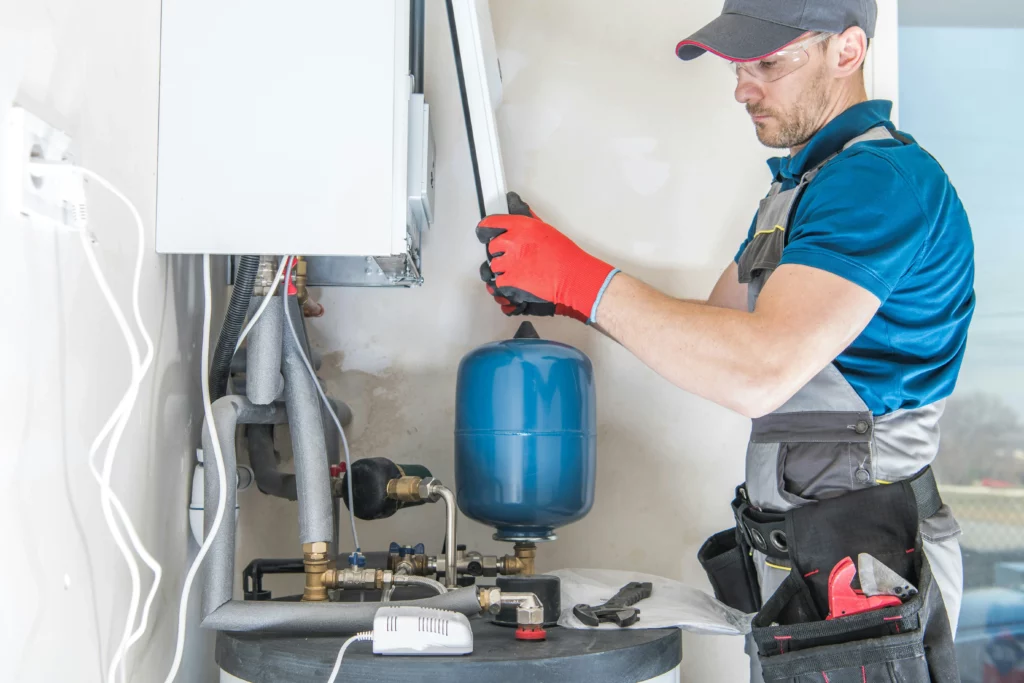
When Your Furnace Needs to be Replaced
Most people researching furnace prices are doing it because something has already gone wrong. Here’s what typically pushes a furnace into replacement territory — and what you can prevent.
Maintenance Negligence
Neglecting regular maintenance can lead to inefficiencies and failures, drastically shortening a furnace’s lifespan. If routine checks are ignored, several issues may arise, and each one can push you toward an earlier replacement:
- Clogged Filters: Reduced airflow, leading to increased strain on the furnace, higher energy consumption, and potential system overheating.
- Wear and Tear on Mechanical Components: Components like the blower motor and belts can wear out faster if not regularly checked and maintained, potentially leading to a sudden breakdown and the shortening of the appliance’s lifespan.
- Ignition or Pilot Control Issues: Faulty ignition or pilot control makes the furnace unreliable, or stops it firing altogether — often forcing a premature replacement.
- Accumulation of Dirt and Debris: This can lead to inefficiency in operation and even potential hazards like carbon monoxide leaks if the heat exchanger becomes compromised.
Old Age
The average furnace will need to be replaced after 15–20 years. However, frequent repairs and decreased efficiency can indicate that it’s time for a replacement sooner.
Increased Energy Bills
If your energy bills are rising despite your usage staying the same, it could indicate that your furnace is losing efficiency and may need to be replaced, whether with a new furnace or a heat pump. Rising bills often make replacement the cheaper option over time, since modern units are significantly more efficient.
Should You Repair or Replace Your Furnace?
Replace it if your furnace is 15+ years old and the repair quote exceeds roughly a third of the cost of a new unit. Repair makes sense on a newer furnace with a one-off failure.
Signs it’s time to replace rather than keep patching:
- It’s 15–20 years old and needing repairs more than once a season
- Gas bills are climbing while your usage hasn’t changed
- Rooms heat unevenly, or the furnace short-cycles
- The heat exchanger is cracked — that’s a carbon monoxide risk and never worth repairing
- Parts are getting hard to source
What Affects the Cost of a New Furnace?
Understanding the various costs associated with purchasing and installing a new furnace can help you budget appropriately. The furnace installation cost is influenced by a range of factors, including the type of furnace, its efficiency level, brand, and even geographical location, such as Ontario. Here we break down these furnace prices further to help you navigate the process of choosing and installing a furnace.
The cost of a new furnace in Ontario varies significantly based on several key factors:
Type of Furnace
Fuel type is the biggest single factor in what you’ll pay — both upfront and to run:
- Natural gas: $3,500–$7,500 installed — the default for most Ontario homes on a gas line, and the cheapest to run.
- Electric: $2,500–$4,500 installed — lowest upfront, but Ontario electricity rates make it the most expensive to operate. If you’re converting from gas, budget another $2,000–$4,000 for an electrical panel upgrade.
- Propane: $5,000–$8,000 installed — for rural homes without gas service. See our propane furnace guide.
- Oil: $5,500–$8,500 installed — mostly older rural homes with an existing tank.

Efficiency and Staging
Every new gas furnace sold in Canada must be at least 95% AFUE — the old 80% “mid-efficiency” and “standard efficiency” units are no longer legal to install. Your real choice is how precisely the furnace controls its output:
- Single-stage, 95% AFUE — $3,500–$5,000 installed. Runs full-blast or off. The entry point for a new high-efficiency furnace.
- Two-stage, 96% AFUE — $4,500–$6,500 installed. Adds a gentler low setting for quieter, more even heat. The most popular choice for Ontario homes.
- Modulating, 98% AFUE — $5,500–$8,500 installed. Adjusts output continuously for the steadiest heat and lowest gas bills. Best value for long-term owners.
Above 95%, each efficiency step buys modest fuel savings — the bigger comfort difference comes from staging, not from the last two AFUE points.
How Much Does a New Furnace Cost by Home Size?
Furnace pricing follows capacity, measured in BTU. Bigger homes need more output, and more output costs more:
- Under 1,200 sq ft — 40,000–60,000 BTU — roughly $3,500–$5,000 installed
- 1,200–1,800 sq ft — 60,000–80,000 BTU — roughly $4,000–$6,000 installed
- 1,800–2,500 sq ft — 60,000–80,000 BTU — roughly $4,500–$6,500 installed
- 2,500 sq ft and up — 80,000–100,000+ BTU — roughly $5,500–$8,500 installed
| Home Size | Furnace Capacity | Installed Cost (Ontario) |
|---|---|---|
| Under 1,200 sq ft | 40,000–60,000 BTU | $3,500–$5,000 |
| 1,200–1,800 sq ft | 60,000–80,000 BTU | $4,000–$6,000 |
| 1,800–2,500 sq ft | 60,000–80,000 BTU | $4,500–$6,500 |
| 2,500+ sq ft | 80,000–100,000+ BTU | $5,500–$8,500 |
How much is a new furnace for a 1,200 square foot home?
A new furnace for a 1,200 square foot home in Ontario typically costs $3,500 to $5,500 installed, using a 40,000–60,000 BTU unit. Homes right at this size sometimes step up to a 60,000 BTU model where ceilings are high or insulation is dated — which nudges the price toward the upper end of that range.
How much is a new furnace for a 1,500 square foot home?
A new furnace for a 1,500 square foot home typically costs $4,000 to $6,000 installed in Ontario, with a 60,000–80,000 BTU furnace. Where your quote lands within that range depends mostly on efficiency tier and brand — a 96%+ AFUE two-stage unit sits higher than a base high-efficiency model.
How much is a new furnace for a 2,000 square foot home?
A new furnace for a 2,000 square foot home typically costs $4,500 to $6,500 installed in Ontario. Most homes this size still use a 60,000–80,000 BTU furnace — a properly run load calculation matters more than adding capacity, because an oversized furnace short-cycles and heats unevenly.
How much is a new furnace for a 2,500+ square foot home?
Larger homes of 2,500 square feet and up typically pay $5,500 to $8,500 installed for an 80,000–100,000+ BTU furnace. At this size, ductwork condition and zoning become part of the conversation — distribution problems, not furnace capacity, are usually why big homes have cold rooms.
Square footage is a starting point, not an answer. Ceiling height, insulation, window quality, and exposure all change the load — which is why any reputable contractor runs a Manual J load calculation before quoting. An oversized furnace short-cycles, wears out early, and heats unevenly, so bigger is not better.
What Else Shows Up on a Furnace Quote
The furnace itself is only part of the number. These extras are common in Ontario homes and are worth asking about before you sign:
- Venting conversion — $300–$800. High-efficiency furnaces vent through PVC, not a chimney. Older homes with chimney-vented systems need new venting.
- Ductwork modification — $500–$1,500. Undersized, leaky, or poorly balanced ducts will throttle a new furnace no matter how efficient it is.
- Permits. Mandatory for furnace replacement in Hamilton. A licensed contractor pulls them for you.
- Old unit removal and disposal. Usually included — confirm it’s in writing.
- Electrical work. Mainly when converting to an electric furnace, which can require a panel upgrade.
- Thermostat. A smart thermostat is a modest add-on and often qualifies for rebates.
Brand
Premium brands offer advanced features and longer warranties, which is reflected in the price. Brands like Lennox, Carrier, and Trane might be on the higher end of the price spectrum compared to more budget-friendly options like Goodman or Rheem.
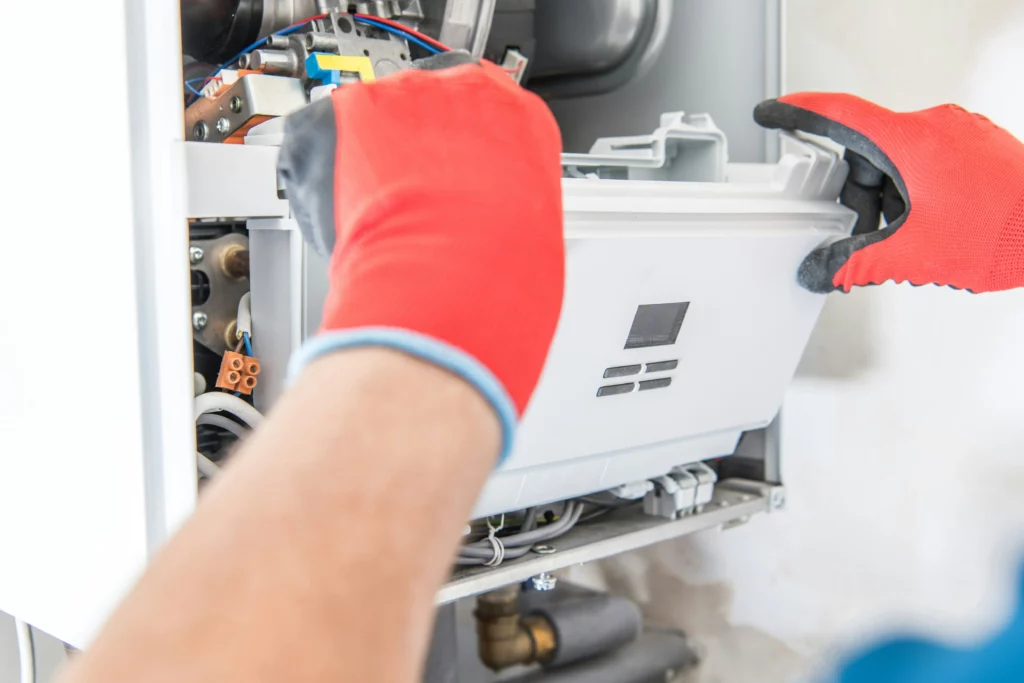
Furnace Installation Cost
The labour costs associated with furnace installation can vary based on the complexity of the job and the company you choose. The typical furnace installation cost can range from $800–$1,800 in labour depending on complexity, which is generally included in the total price quoted by most HVAC companies. Factors influencing installation costs include:
- Complexity of Installation: Simple replacements tend to be less expensive, while converting from one type of furnace to another, or installations requiring extensive ductwork modification, will increase costs.
- Location: Urban areas might offer more competitive pricing due to the higher number of service providers.
- Additional Services: Including duct cleaning, modifications, or upgrades to thermostats and other home HVAC components.
Beyond the sticker price, factor in long-term energy savings, any rebates you qualify for, and the reliability and warranty of the brand you choose. Those add up to the real cost of ownership — which is often very different from the cheapest quote that balances upfront costs with long-term benefits.

Rebates on a New Furnace in Ontario
Ontario’s rebate landscape changed significantly, and a lot of older advice online still points to programs that have closed:
- Canada Greener Homes Grant — closed. It stopped accepting new applications in February 2024, and the final document deadline passed at the end of 2025. It also never covered furnaces for most homeowners, only heat pumps and envelope upgrades.
- Home Renovation Savings Program — the current one. Launched in 2025 and delivered through Save on Energy, it offers rebates on qualifying energy-efficiency upgrades for Ontario homeowners.
- Enbridge Gas programs — eligibility and amounts shift year to year for gas customers.
- Canada Greener Homes Affordability Program — a newer federal program for low-to-median-income households, rolling out province by province.
Rebate rules, amounts, and deadlines change frequently, and eligibility usually depends on the exact model installed and whether you apply before the work begins. We keep current program details on our rebates page — check there before you commit to a purchase, or ask our team which programs your install qualifies for.
Article Summary
- Cost: A new furnace in Ontario runs $3,500–$7,500 installed; most homeowners pay $4,500–$6,500.
- Efficiency: All new gas furnaces in Canada are 95% AFUE or higher — the old 80% tiers no longer exist.
- Lifespan: Most furnaces last 15–20 years; skipped maintenance shortens that considerably.
- What drives price: Fuel type, home size (BTU), staging, and installation complexity.
- Rebates: The Canada Greener Homes Grant has closed. Ontario’s Home Renovation Savings Program is the current route — check eligibility before you buy
Conclusion: New Furnace Cost in Ontario
Investing in a new furnace is a significant but necessary expenditure that enhances comfort and efficiency in your home. At Dynamic Heating and Cooling, we provide comprehensive services to help you choose the best furnace for your needs, ensuring professional installation and long-term satisfaction. Contact us today to learn more about your options and how we can make your new furnace installation seamless and affordable.