
 Proudly Family-Owned
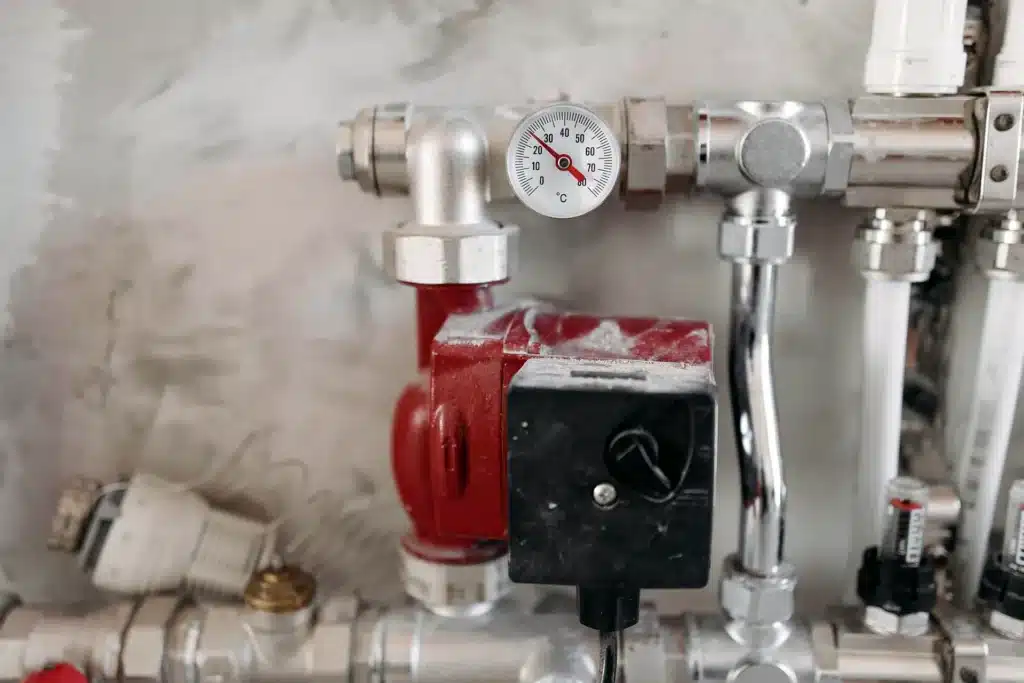
A boiler leaking water usually has one of five causes: a pressure relief valve discharging because system pressure is too high, a failed expansion tank, a worn pump seal or fitting, a blocked condensate line on a high-efficiency unit, or a corroded heat exchanger. The first four are repairable. The last one usually means replacement.
A small drip under a boiler is easy to ignore, but water is the one thing a hydronic heating system is designed to keep inside. This guide explains how to tell where the water is coming from, what each source means, what to do right now, and when a leak is a simple fix versus a sign the boiler is near the end.
Is a Leaking Boiler Dangerous?
A leaking boiler is rarely an immediate danger to people, but it is never safe to ignore. Water near the boiler’s electrical controls is a shock and short-circuit risk, a pressure-related leak can mean a safety valve is doing its job under stress, and a slow leak quietly corrodes the heat exchanger, the most expensive part of the boiler.
The real risk is what the leak is telling you. A relief valve that keeps discharging means pressure inside the system is climbing past its design limit. A drip from the bottom of the casing can mean the heat exchanger is failing. And every time the system loses water, it refills with fresh, oxygen-rich water that speeds up internal rust. If you ever smell gas near the boiler, the leak is no longer the priority: get out of the house and call your gas utility or 911 from outside.
Boiler or Water Heater: Which One Is Actually Leaking?
First make sure it is the boiler. Many Hamilton basements have a boiler for heating and a separate tank water heater for taps and showers, side by side. A boiler has a pressure gauge, a circulator pump and pipes to radiators or in-floor loops; a water heater is a tall insulated tank.
Some homes use a combination boiler that heats both, which makes the distinction less obvious. If the water is pooling under a standalone tank, the cause and the fix are different, and our guide to a hot water tank leaking from the bottom covers that case. Everything below is about boilers that heat the home through radiators or in-floor piping.
Why Is My Boiler Leaking? The Most Common Causes
Most boiler leaks trace back to pressure, seals, condensate or corrosion. Where the water appears is the best clue to the cause. The table below lists the common sources, where you will usually see the water, and how serious each one tends to be.
| Cause | Where you see the water | Usually |
|---|---|---|
| Pressure relief valve discharging | Dripping from a pipe on the side of the boiler that runs toward the floor | Repairable; the real fault is often the expansion tank or fill valve |
| Failed or waterlogged expansion tank | No visible tank leak; pressure spikes and the relief valve drips | Repairable |
| Leaking fill or pressure-reducing valve | Near the cold-water supply connection | Repairable |
| Circulator pump seal or flange gasket | Around the pump, often with rust or mineral staining | Repairable |
| Loose or corroded fittings and valves | At pipe joints, radiator valves or bleed screws | Repairable |
| Blocked or disconnected condensate line (high-efficiency boilers only) | Under the boiler, clear and slightly acidic water | Repairable, often a simple fix |
| Corroded or cracked heat exchanger | From inside the casing, typically at the bottom | Usually replacement |
Boiler Leaking From the Bottom: What It Usually Means
Water coming from the bottom of the boiler casing, rather than a pipe or fitting outside it, is the leak to take most seriously. It often points to corrosion or a crack in the heat exchanger, the internal section where water is heated. Heat exchanger failure is usually not economical to repair.
Before assuming the worst, rule out the simpler sources that drip downward and collect at the base: a pump seal above, a fitting on the return pipe, or on a high-efficiency boiler, condensate. A technician removes the front panel and traces the water to its highest wet point. If the heat exchanger is the source, the conversation turns to replacement, and our boiler repair or replace guide walks through how that decision is made, including whether the radiators can stay.
Water Dripping From the Pressure Relief Valve Pipe
A drip or trickle from the pipe on the side of the boiler is the pressure relief valve releasing water because system pressure has gone too high. The valve is a safety device and is working as designed. The question is why the pressure is high, and the answer is usually the expansion tank or the fill valve.
Residential hot water heating systems typically run at roughly 12–15 psi when cold and rise into the low 20s when hot. Most residential relief valves are rated to open at 30 psi. If the gauge climbs toward 30 when the boiler fires, the expansion tank, which absorbs the water’s expansion as it heats, has often lost its air charge or failed. A fill valve that keeps feeding water into an already full system causes the same symptom. Replacing the relief valve alone does not fix either one, and a relief valve should never be capped or plugged.
Is It a Boiler Leak or Condensate?
On a high-efficiency (condensing) boiler, water under the unit is often condensate, not a system leak. Condensing boilers extract so much heat from the exhaust that water vapour condenses, and that slightly acidic water drains through a trap and a plastic line to a floor drain or pump. A blocked or disconnected line spills it onto the floor.
A quick check: condensate appears only while the boiler is running, and the pressure gauge stays steady. A true system leak continues whether the boiler is firing or not and the pressure gauge slowly drops. Older atmospheric boilers do not produce condensate in normal operation, so water under one of those is almost always a genuine leak.
What to Do Right Now If Your Boiler Is Leaking
Contain the water, note what the pressure gauge reads, and make the area safe before calling for service. Do not keep topping up the system to make the leak go away: refilling hides the symptom while adding fresh oxygen that accelerates internal corrosion.
- Check for a gas smell. If you smell gas, get out of the house and call your gas utility or 911 from outside, as the TSSA’s home fuel safety advice sets out. Do not operate switches.
- Keep water away from electrical parts. If water is near the controls or wiring, switch the boiler off at its service switch or breaker.
- Read the pressure gauge. Note the reading cold and, if the boiler is still running, hot. This one number tells the technician a lot.
- Find the highest wet point. Water runs down, so the drip on the floor is rarely the source. Look at the pump, valves, the relief valve pipe and the condensate line.
- Contain and photograph it. Put a container or towels under the drip and take photos of where the water is coming from.
- Call a licensed technician. In Ontario, work on gas-fired boilers must be done by a gas technician licensed under the Technical Standards and Safety Authority (TSSA).
How a Technician Diagnoses a Boiler Leak
A proper diagnosis traces the water to its source, checks system pressure cold and hot, tests the expansion tank’s air charge, and inspects the heat exchanger. The goal is to find the cause, not just the drip, so the repair does not need repeating a month later. A standard service call with Dynamic Heating & Cooling is $119.99 ($174.99 after hours, on weekends and holidays), and the fee is credited toward the repair if you go ahead.
The technician will usually check:
- Pressure readings against the system’s normal operating range
- The expansion tank’s air charge, and whether it is waterlogged
- The fill and pressure-reducing valve for overfeeding
- The circulator pump, its seals and flange gaskets
- Fittings, valves, radiator connections and bleed screws
- The condensate trap and line on high-efficiency boilers
- The heat exchanger and casing for corrosion, staining or cracks
Dynamic Heating & Cooling’s technicians are certified on both atmospheric and high-efficiency boilers, residential and commercial, which matters when the leak turns out to involve gas components or venting rather than water alone.
Can a Leaking Boiler Be Repaired, or Does It Need Replacing?
Most boiler leaks are repairable: relief valves, expansion tanks, fill valves, pump seals and fittings are standard replacement parts. Replacement becomes the better option when the heat exchanger itself is leaking, when the boiler is near the end of its service life, or when leaks and repairs have become a yearly pattern.
| Situation | Usual direction |
|---|---|
| External component (valve, tank, seal, fitting) on a boiler in good condition | Repair |
| Condensate line blocked or disconnected | Clean or reconnect; no major repair |
| Heat exchanger leaking or visibly corroded | Replace |
| Repairs needed in two or more consecutive seasons | Lean toward replacement |
| Older atmospheric boiler with rising fuel bills and a new leak | Get a replacement quote alongside the repair |
Age matters too. Well-maintained cast-iron boilers commonly last 25 years or more, while condensing boilers typically run 15–20. A leak on a boiler well inside that range is usually a repair; a leak on one past it is a good time to compare options.
How to Prevent Boiler Leaks
Annual service is the most reliable way to prevent leaks. A yearly inspection checks pressure, the expansion tank and relief valve, the pump and fittings, and the heat exchanger before small issues become leaks. A one-time boiler tune-up with Dynamic Heating & Cooling is $220, or $19.95 a month on a Boiler Member Club plan, far less than water damage or an early replacement.
Between visits, glance at the pressure gauge once a month during the heating season and note anything outside the normal range. Watch for rust streaks, white mineral crust around fittings, or a relief valve pipe that is wet. Fall is the right time for service: catching a failing expansion tank in October is a routine repair, while finding it in January can mean a cold house while parts are sourced. Our boiler maintenance service covers these checks.
Getting a Leaking Boiler Looked At
A boiler leaking water is almost always telling you something specific: pressure is too high, a seal has worn, condensate has nowhere to go, or the heat exchanger is giving out. Finding which one early keeps a small repair from becoming a large one.
If your boiler is leaking, Dynamic Heating & Cooling provides boiler repair in Hamilton and the surrounding area, including emergency service. You can also read more about our boiler services, or call 289-962-4811.
FAQs
Can I keep using my boiler if it is leaking?
If the leak is a slow drip from a fitting or the relief valve pipe and no water is near the electrical controls, the boiler can usually keep running briefly while you arrange service. If water is reaching the controls, the leak is fast, or you smell gas, shut it off and call immediately.
Why does my boiler leak only when the heating is on?
A leak that appears only during operation usually points to pressure or temperature. As water heats it expands, raising pressure; a failed expansion tank lets it climb until the relief valve opens. On a high-efficiency boiler, water that appears only while running is often condensate from a blocked drain line.
Should I turn off the water supply to a leaking boiler?
Only if the leak is significant and you know where the boiler’s fill valve or supply valve is. Closing it stops the system refilling while it leaks. Leave the rest to a technician, and do not close any valves between the boiler and the relief valve, which must always stay open.
Disclaimer: This article is for general information only. Any prices shown are typical Hamilton-area estimates, not quotes — actual costs depend on your home, your system and site conditions. For exact pricing on your system, call Dynamic Heating & Cooling at 289-962-4811.