
 Proudly Family-Owned
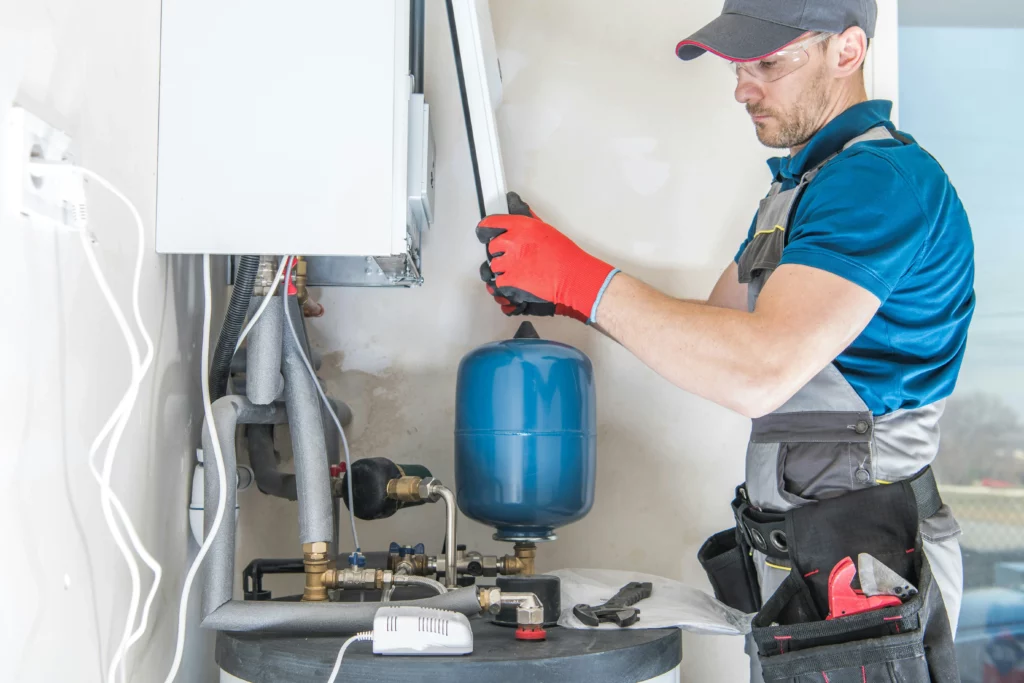
Repair a Hamilton century-home boiler when it is under about 20 years old, the fault is a single component, and the heat exchanger is sound. Replace it when the heat exchanger is cracked, when repairs are becoming annual, or when the unit is 25–30+ years old and still atmospheric — by then efficiency losses outweigh the savings.
Hamilton has one of the larger concentrations of hydronic-heated century homes in southern Ontario — Durand, Kirkendall, Stinson, the North End and stretches of the lower city are full of them. Those houses raise decisions a forced-air homeowner never faces. Here is how the repair-or-replace call actually gets made.
What Counts as a Century-Home Heating System in Hamilton?
Typically a gas-fired boiler feeding cast-iron radiators or in-floor piping, distributing heat as hot water rather than warm air. Many Hamilton examples have been converted at least once — coal to oil to gas — leaving a modern boiler attached to original distribution piping and radiators that may be a hundred years old.
That split matters enormously for the decision ahead. The boiler is a serviceable appliance with a finite life. The radiators and much of the distribution piping are building fabric, often in better condition than the boiler bolted to them, and rarely the reason a system needs replacing.
Boiler Repair or Replace: The Questions That Actually Decide It
Five questions settle almost every case: how old is the boiler, is the heat exchanger sound, how many repairs has it needed in the last three years, is it atmospheric or high-efficiency, and are replacement parts still available. Answer those and the decision usually makes itself.
| Situation | Usual Direction | Why |
|---|---|---|
| Under 15 years, first significant repair | Repair | Plenty of service life remains; a single component failure is normal wear |
| 15–20 years, isolated fault, sound heat exchanger | Usually repair | Still economic, but start planning the replacement year |
| Repairs in two or more consecutive seasons | Lean replace | The pattern, not the part, is the signal |
| Cracked or badly corroded heat exchanger | Replace | Not economically repairable; a combustion safety issue |
| Parts no longer manufactured | Replace | A repairable boiler you cannot get parts for is not repairable in January |
| 25–30+ years, atmospheric, rising bills | Replace on your schedule | Efficiency loss costs more annually than the deferred repair saves |
Note what is not on that list: the age of the house, and the age of the radiators. Neither is a reason to replace a boiler.
How Long Should a Boiler Last?
Boilers outlive furnaces comfortably. A well-maintained cast-iron atmospheric boiler regularly reaches 25–30 years and occasionally beyond; modern high-efficiency condensing boilers typically run 15–20, because condensing operation is chemically harder on the heat exchanger. Both figures assume annual service.
This longevity is why century-home owners so often inherit a working boiler of genuinely unknown age. If nobody can date the unit, the rating plate serial number will — a technician decodes it in seconds, and it is the first thing worth establishing before any repair-or-replace conversation.
Signs a Century-Home Boiler Is Near the End
Watch for repeated pressure loss, visible corrosion or rust staining at the base, water pooling under the unit, kettling or banging during operation, rooms that no longer reach temperature, and repair visits clustering season over season. Any one warrants a look; several together is a replacement conversation.
Two symptoms deserve immediate attention rather than monitoring. A yellow, lazy or wavering burner flame instead of a steady blue one can signal a combustion problem. And any smell of gas means leaving the building and calling your gas utility from outside — not troubleshooting. Our boiler repair service in Hamilton covers the diagnostic side of the rest.
What Makes Century-Home Boiler Work Different
Access, chimneys and piping. Century-home mechanical rooms are frequently cramped stone-walled basements with low headroom and a single narrow stair, which constrains what equipment can physically be brought in and where it can be positioned. That is a real engineering constraint, not a detail.
The chimney is the bigger one. Older Hamilton homes commonly vent an atmospheric boiler into a masonry chimney. Replace that boiler with a high-efficiency condensing unit and the chimney is no longer used for the boiler — the new unit vents through a sidewall in plastic pipe. If a gas water heater shares that chimney, it may then be oversized for the remaining single appliance, which has to be addressed as part of the job. This surprises more homeowners than any other part of a boiler replacement.

Can You Keep the Radiators and Replace Only the Boiler?
Usually yes, and it is the normal outcome. Cast-iron radiators are extremely durable, and a correctly specified modern boiler can run an original century-home distribution system with the right controls. Full system replacement is the exception, not the rule.
The one genuine constraint is water temperature. Condensing boilers achieve their headline efficiency by running lower supply temperatures and condensing flue gases — but old cast-iron radiators were sized for much hotter water. If the radiators cannot deliver enough heat at the lower temperature, a condensing boiler runs hot to compensate and never reaches its rated efficiency. Whether your radiators have enough surface area for lower-temperature operation is a calculation, not a guess, and it is the single most important technical question in a century-home boiler replacement.
Atmospheric or High-Efficiency: Which Suits an Older Hamilton Home?
High-efficiency condensing boilers deliver substantially better fuel efficiency and are the default choice for most replacements. Atmospheric boilers remain simpler, cheaper to install, and tolerant of high-temperature distribution systems — which is exactly the situation many unmodified century homes present.
| Atmospheric | High-Efficiency Condensing | |
|---|---|---|
| Venting | Existing masonry chimney | Sidewall plastic venting; chimney freed up |
| Supply water temperature | High — suits original radiators | Lower is better; radiator sizing must support it |
| Fuel efficiency | Lower | Substantially higher when correctly commissioned |
| Condensate | None | Needs a drain and a trap that gets serviced |
| Typical service life | Longer | Shorter, more maintenance-sensitive |
Dynamic is certified on both types, residential and commercial, which is deliberately unusual — a good deal of the Hamilton market services forced air only. The full range is set out on our boiler services page, and the boiler replacement service covers specification and installation.
What a Professional Boiler Inspection Actually Checks
Dynamic’s boiler inspection covers: low water cut-off test, combustion air, high limit and flow switch tests, burner tube / heat exchanger condition, flame colour, soot buildup, and flame sensor cleaning. On the high-efficiency version, the checklist also covers condensate trap, combustion analysis and error codes — with a section for the technician’s observations and any deficiencies.
Those checks are the reason an inspection settles a repair-or-replace question that guesswork cannot. Heat exchanger condition and combustion quality are the two findings that most often decide the outcome, and neither is visible without instruments. In Ontario, work on natural gas equipment legally requires a certified gas technician under the Technical Standards and Safety Authority, so this is not a homeowner inspection in any case.
Should You Switch from a Boiler to Forced Air?
Rarely worth it for the heating alone. Converting a century home from hydronic to forced air means installing an entire duct system into a house that has no chases for it — expensive, disruptive, and usually at the cost of closet space and ceiling height on every floor.
The honest argument for conversion is central air conditioning, not heating. If you want ducted cooling, that changes the calculation. If you do not, high-velocity or ductless cooling can be added alongside a retained boiler, keeping the radiant heat that hydronic-home owners overwhelmingly prefer. Our comparison of boilers versus furnaces covers how the two distribute heat differently.
Timing the Decision: Why Fall Beats February
A boiler replaced in September or October is a planned purchase — quotes compared, equipment properly specified, radiator temperatures actually calculated, incentives applied, install date chosen. The same boiler replaced during a February failure is whatever can be sourced and fitted quickly in a cold house.
Century-home boiler replacements are especially poor emergency projects, because the venting and chimney questions above take time to resolve properly. Natural Resources Canada’s home heating and cooling maintenance guide recommends scheduling the heating check-up in the fall for the same reason. If replacement is on the horizon, incentive programs listed at Ontario’s Home Renovation Savings Program generally reward planned upgrades rather than emergencies — confirm current amounts and eligibility with the program directly, as terms change.
The Practical Next Step
If your boiler is over 20 years old, has needed work in the last two winters, or has never been formally inspected, get the inspection done before the cold sets in. It either buys you confidence for the season or gives you the runway to plan a replacement properly — and both outcomes beat finding out in February.
Our boiler maintenance service covers the full checklist above, and this season’s Early-Bird Furnace or Boiler Start-Up offer includes the boiler start-up inspection with the first three months of the maintenance plan free. Cost guidance for a replacement is in our guide to new boiler costs and replacement signs.
FAQs
Are old cast-iron radiators worth keeping?
Almost always. They are durable, they distribute heat comfortably and evenly, and replacing them adds significant cost without improving comfort. The relevant question is not whether to keep them but whether they have enough surface area to run at the lower water temperatures a condensing boiler prefers.
Why does my boiler keep losing pressure?
Persistent pressure loss means water is leaving the system somewhere — a leaking fitting, a failing expansion vessel, or a relief valve discharging. Topping it up repeatedly treats the symptom while fresh oxygenated water accelerates internal corrosion. It needs diagnosing rather than refilling.
What is kettling, and is it serious?
Kettling is the banging or rumbling sound a boiler makes when scale or sludge causes localised overheating inside the heat exchanger. It is a genuine warning sign, not a quirk of old systems. Left alone it stresses the heat exchanger — the single most expensive component to lose.
Can a boiler be replaced without touching the radiators?
In most Hamilton century homes, yes. The boiler is swapped and connected to the existing distribution piping. What often does change is venting, the gas connection, and the controls — and if a gas water heater shared the old chimney, that arrangement has to be reassessed as part of the work.
How often should a boiler be serviced?
Annually, ideally in early fall before the heating season, for both atmospheric and high-efficiency boilers. The combustion, low water cut-off and heat exchanger checks are safety items rather than optional tuning, and documented annual service is also what most manufacturer warranties require to remain valid.
Disclaimer: This article is for general information only. Any prices shown are typical Hamilton-area estimates, not quotes — actual costs depend on your home, your system and site conditions. Rebate programs and their amounts change over time; confirm current details with the program provider before making decisions. For exact pricing on your system, call Dynamic Heating & Cooling at 289-962-4811.