
 Proudly Family-Owned

If your basement has flooded, do these things in order: keep everyone out of the water until the power is confirmed off, call your insurance company to open a claim, document everything with photos and video, then get the water out and dry the space within 24–48 hours to prevent mold. Do not turn on your furnace, hot water tank, or any appliance that sat in water until a licensed technician inspects it.
With the recent state of emergency in St. Catharines and flooding across the Niagara Region, thousands of homeowners are facing this exact situation right now. This guide walks you through the first 48 hours step by step — including the part most flood checklists skip: what floodwater does to your furnace, hot water tank, and ductwork, and why those need a licensed gas technician before they’re switched back on.
What Should You Do Immediately After a Basement Flood?
The priority is safety, the second is your insurance claim, and the third is speed — mold can begin developing within 24–48 hours of a flood. Work through these steps in order:
- Stay out of the water. Standing water can hide electrical hazards, sewage contamination, and sharp debris. If any outlet, appliance, or your electrical panel is in or near the water, do not step in.
- Cut the power — safely. If you can reach your electrical panel without touching water, shut off power to the basement. If the panel itself is in the flooded area, call your utility or an electrician. Never wade in to reach it.
- Shut off the gas supply to affected appliances if you can do so safely, and leave the area if you smell gas.
- Call your insurance company and open a claim before you start cleaning. Ask what documentation they need.
- Document everything. Photos and video of the water level, damaged belongings, and every affected appliance — including model and serial number plates on your furnace and hot water tank.
- Call a restoration company for water removal and drying. For more than a few centimetres of water, or any sewage backup, this needs professional extraction and drying equipment — box fans can’t dry inside wall cavities.
- Book a licensed technician to inspect your furnace, hot water tank, and ductwork before anything is switched on. This is the step most homeowners miss — and the one that carries real safety risk.

Is It Safe to Enter a Flooded Basement?
Not until you’ve confirmed the power is off and the water is not contaminated. The two serious risks are electrocution — if outlets, cords, or appliances are submerged — and sewage contamination, which is common when flooding comes from a sewer backup rather than rain alone. If the flood involved sewage, treat all standing water as contaminated: rubber boots, gloves, and no contact with bare skin.
If in doubt, stay out and call for help. During a widespread flood event like the one in St. Catharines, crews and utilities are triaging — but an electrified basement is never worth the risk.
How Can You Tell If Your Furnace Is Damaged by Flooding?
Assume any furnace that stood in water is damaged until a licensed technician says otherwise — even if it looks dry and even if it still runs. Floodwater wicks into gas valves, control boards, insulation, and burner assemblies. Corrosion and contamination continue after the water is gone, which is why manufacturers require water-exposed gas controls and valves to be replaced, not dried out — a control that works today can fail unsafely weeks later.
Warning signs after a flood:
- Furnace won’t start, short-cycles, or the blower runs constantly
- Burn marks, corrosion, or a waterline visible on the cabinet
- Unusual smells when it runs — musty (mold in insulation) or metallic/burning (electrical)
- Yellow or wavering burner flame instead of steady blue
The safe sequence: leave it off, photograph the waterline and data plate for your insurer, and book a TSSA-licensed gas technician for an inspection. Depending on water depth and duration, the honest answer is often that furnace replacement is safer and cheaper than part-by-part repair of a contaminated unit.
What About Your Hot Water Tank After a Flood?
A hot water tank that stood in floodwater generally needs replacement, not repair. Gas tanks: the gas control valve, thermocouple, and burner assembly sit low on the unit — exactly where the water was — and water-exposed gas controls must be replaced for the same safety reasons as furnace valves. Electric tanks: submerged elements, thermostats, and wiring are a shock and failure risk. Insulation inside the tank jacket also stays wet, breeding mold and rusting the tank from the outside in.
If the water line reached the controls, budget for a new unit and have it documented for your claim. You don’t need to wait until the basement is fully dry to get hot water back — replacement can usually happen while drying is still underway.

What Happens to Ductwork After a Flood?
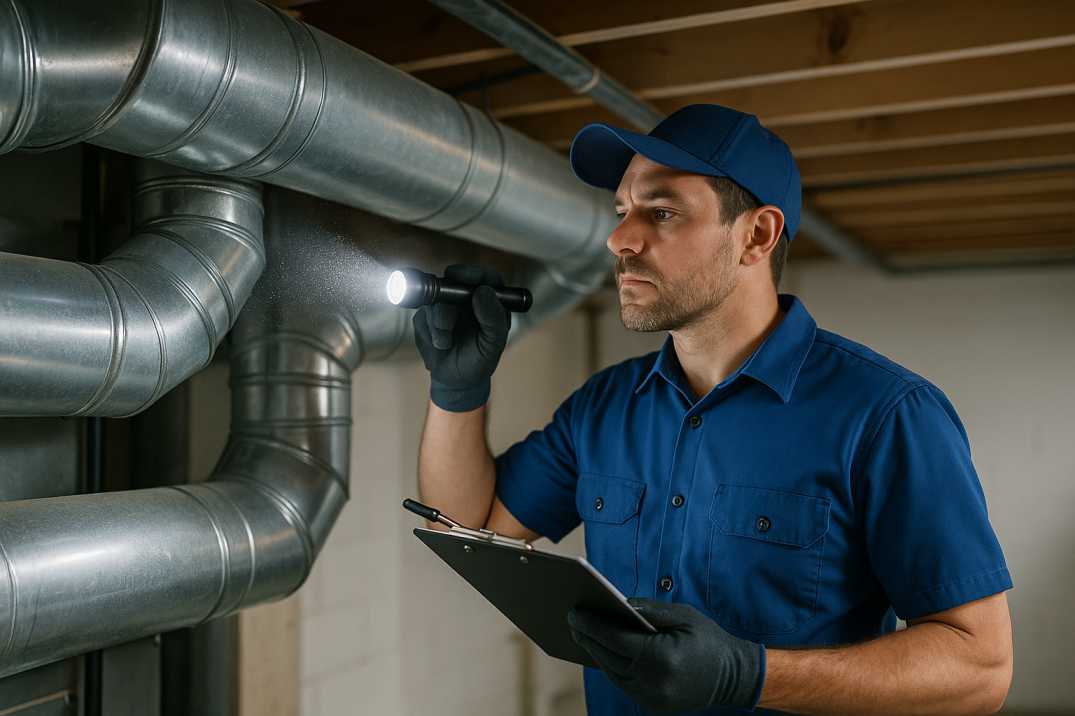
Ducts that took on floodwater hold moisture, silt, and whatever contamination came with the water — and the moment the system restarts, that gets distributed through the house. Metal ducts can sometimes be cleaned and disinfected; flexible or insulated ducts that were submerged usually need replacing, because the insulation cannot be effectively dried or sanitized.
Have the ductwork inspected before the furnace or air conditioning is switched back on, not after. Running a system connected to contaminated ducts is how a basement problem becomes a whole-house air quality problem.
Does Home Insurance Cover Sewage Backup in Ontario?
Usually only if you purchased the optional coverage. Standard Ontario home insurance policies typically do not include sewer backup protection by default — it’s an add-on endorsement, and overland water (flooding from heavy rain or rivers) is a separate optional coverage as well. Whether you’re covered depends on which endorsements are on your specific policy.
What to do regardless:
- Call your insurer immediately — coverage questions get resolved faster with an open claim and full documentation.
- Ask specifically whether you carry “sewer backup” and “overland water” endorsements.
- Document appliance damage separately — furnace and hot water tank replacement are often significant line items on flood claims, and a written inspection report from a licensed HVAC technician strengthens the claim.
- If you’re declined, ask about government disaster-relief programs that may activate for declared emergencies.
Who Should You Call — and In What Order?
Flood recovery involves three different trades, and homeowners often lose days by calling them in the wrong order:
- Your insurance company — open the claim first and find out what documentation they require.
- A restoration company — for water extraction, drying, and cleanup. The 24–48 hour mold clock is running, so this call is urgent.
- A licensed HVAC company — for the furnace, hot water tank, ductwork, and air conditioning. Don’t wait for the basement to be dry: equipment assessments feed your insurance claim, and replacement units often need ordering.
Those are three separate jobs. A restoration crew can dry your basement perfectly and still leave you with no heat, no hot water, and a furnace that isn’t safe to run — because gas equipment legally requires a licensed technician.
Flood-Damaged Furnace, Water Heater, or Ductwork? Here’s How We Can Help
Dynamic Heating & Cooling is responding across St. Catharines and the Niagara Region — Merritton, Grantham, Port Dalhousie, Port Weller, Thorold, Lincoln and the surrounding areas — for the mechanical side of flood recovery:
- TSSA-licensed inspection of flood-damaged furnaces, boilers, and heat pumps
- Hot water tank assessment and replacement, often same-day
- Ductwork inspection before the system is restarted
- Written documentation of equipment damage for your insurance claim
- Emergency heat restoration, 24/7
To be clear about scope: we do not provide water extraction, sewage cleanup, drying, or property restoration — a restoration company handles that. We handle the heating, cooling, and hot water equipment the flood damaged, and we coordinate with restoration crews every day.
Furnace or water heater underwater? Don’t turn it on. Call 289-962-4811 — or see our flood-damaged furnace & HVAC inspection service for St. Catharines.
How Do You Prevent Flood Damage to HVAC Equipment Next Time?
Once you’re through the emergency, a few upgrades meaningfully reduce the next flood’s damage bill: a backwater valve (stops sewage from backing up into the basement — some municipalities offer subsidy programs), a sump pump with battery backup (storms that flood basements often knock out power at the same time), and elevating mechanical equipment — putting the furnace and hot water tank on a raised platform is inexpensive during a replacement and can spare thousands next time. We covered backwater valves in detail in What Is a Backwater Valve?