
 Proudly Family-Owned

A gas furnace in Ontario typically lasts 15–20 years. Well-maintained units in favourable conditions reach the top of that range or beyond; neglected ones, oversized ones, and units in harsh conditions can fail in 12. The spread between those outcomes is mostly decided by maintenance, sizing and installation quality — not brand luck.
Here’s what actually determines where your furnace lands in that range, the signs it’s entering its final seasons, and how to decide between one more repair and replacement.
How Long Does a Gas Furnace Last on Average?
The working range for modern gas furnaces is 15–20 years. High-efficiency condensing furnaces — essentially everything installed in Ontario since efficiency standards tightened — run hotter secondary heat exchangers and handle acidic condensate, which makes consistent maintenance matter more than it did for the older 80% units, some of which famously soldiered past 25 years.
Electric furnaces last longer (20–30 years, no combustion), and boilers often reach 20+. But for the gas forced-air systems heating most Hamilton homes, 15–20 is the honest planning number — and Natural Resources Canada’s home heating and cooling maintenance guide recommends annual pre-season check-ups — and it is the fall visit’s combustion and heat-exchanger checks that protect a furnace across that life.
The 6 Factors That Decide Your Furnace’s Lifespan
| Factor | Effect on Lifespan |
|---|---|
| Annual maintenance | The single biggest controllable factor — small faults caught before they cascade |
| Sizing | Oversized furnaces short-cycle; every extra start-stop is wear |
| Installation quality | Bad venting, airflow or gas pressure from day one ages a unit permanently |
| Filter habits | Clogged filters starve airflow and overheat the heat exchanger |
| Run environment | Damp basements corrode; dusty or renovation-heavy homes clog |
| Climate load | Ontario winters mean long heating seasons — 2,000+ run hours a year |
Sizing deserves the extra sentence: an oversized furnace heats the house in short blasts and shuts off, dozens of times a day. Ignition cycles — not run hours — are what wear igniters, and thermal cycling stresses the heat exchanger. If your furnace has always short-cycled, its clock runs fast; our guide to furnace sizing problems covers both directions of the mistake.
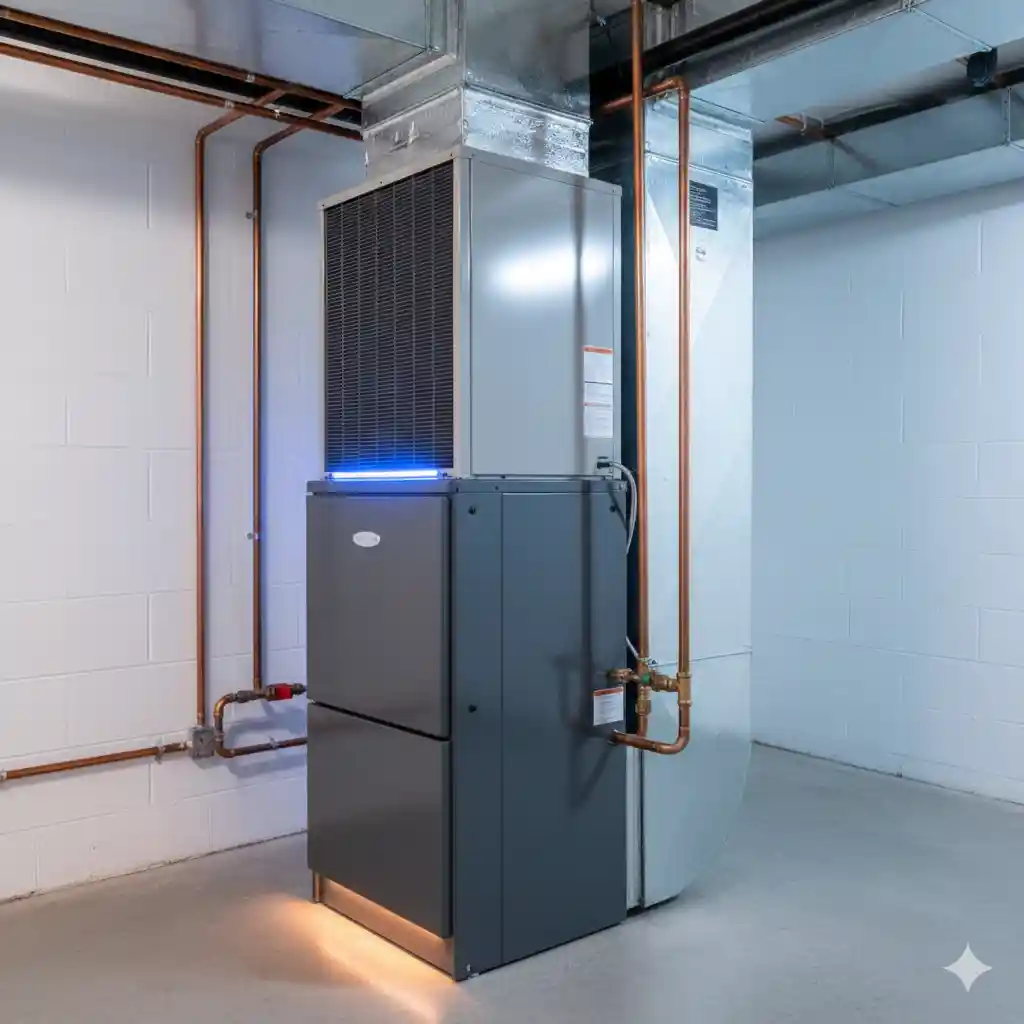
Signs Your Furnace Is in Its Final Years
Age alone isn’t a verdict — condition is. The signals that matter: repair frequency accelerating (two or more repairs in two seasons), gas bills creeping up year-over-year with no rate change, rooms heating unevenly that used to be fine, the blower running louder or longer to deliver the same heat, and visible corrosion or soot streaking on the cabinet or flue. Any yellow or wavering burner flame — instead of steady blue — gets a technician promptly, since it can signal combustion problems.
One sign outranks all others: a cracked heat exchanger. It’s the component that separates combustion gases from your household air, it’s not economically repairable in an older unit, and its failure is a carbon-monoxide safety issue. A cracked heat exchanger on a 14-year-old furnace is a replacement decision, made for you.
Repair or Replace: The Math That Actually Helps
The rule of thumb that holds up: multiply the furnace’s age by the repair quote — past $5,000, replacement usually wins. A $400 blower repair on an 8-year-old furnace ($3,200) is easy; the same repair at 15 years ($6,000) is buying time on a unit entering its failure years. Layer on the direction of travel: a first-ever repair reads differently than the third in two winters.
The other half of the math is what you’d be buying instead. Our Ontario furnace cost guide covers current installed pricing, and replacement is also the moment the heat-pump question deserves one deliberate look — Ontario’s current rebate programs put meaningful money behind hybrid and cold-climate systems, and rebates reward planned replacements, not emergency ones. Our guide to HVAC financing in Ontario covers how to pay for the replacement and stack those rebates.
How to Add Years to the Furnace You Have
Four habits deliver most of the available lifespan: an annual professional tune-up (combustion and airflow verified, wear parts caught early — the full scope is in our furnace tune-up checklist); filter changes every 1–3 months in season; keeping supply and return vents open and unblocked — closing vents to “save energy” raises system pressure and backfires; and keeping the furnace room clean and dry, with combustion air unobstructed.
None of this is exotic. The 20-year furnaces we see in Hamilton homes are rarely lucky — they’re maintained, correctly sized, and breathing through clean filters. The 12-year failures usually broke at least two of those rules for a decade.
The Maintenance Log: The Cheapest Lifespan Insurance There Is
A furnace with a paper trail is worth more than the same furnace without one — three separate ways. Manufacturer parts warranties commonly require proof of annual professional maintenance; when a $900 component fails in year six, the service records are what stand between a covered claim and a denied one. Extended labour warranties (including plans tied to maintenance memberships) work the same way. And at sale time, a home inspector’s “furnace age unknown, service history unknown” line item becomes a buyer’s negotiating chip — a folder of dated service records neutralizes it.
What to keep: the installation invoice (model, serial, date), every service visit record with what was measured and replaced, and filter-change dates if you track nothing else. ENERGY STAR’s maintenance guidance frames the annual visit as the core of the record — and a maintenance plan does the record-keeping automatically, which is half its quiet value.
Does Brand Determine How Long a Furnace Lasts?
Less than marketing suggests. Premium and budget furnaces increasingly share component suppliers, and the installation plus maintenance quality outweigh the badge. A correctly installed, annually serviced budget unit will outlast a premium furnace that was oversized on day one and never serviced.
Brand does shift the odds at the margins — warranty terms, parts availability, and known weak points differ. Our reviews of furnace brands to avoid in Canada and whether Goodman is a good furnace brand cover the specifics — but read them as tie-breakers, not the main event.
Ontario’s climate also shapes the maintenance calculus in a way national averages miss: a Hamilton furnace runs roughly from October to April, carrying the home through freeze-thaw cycles and the January weeks where it barely shuts off. That long duty cycle is why the annual inspection lands in fall here, why filter neglect shows up faster than in milder provinces, and why the same furnace model often ages a year or two faster in Ontario than in Vancouver. Plan with the local clock, not the brochure’s — and treat year 15 as the start of the decision window, not a countdown that begins at the first failure.
Furnace Age Milestones: What to Expect When
| Age | What’s Typical |
|---|---|
| 0–5 years | Warranty years — keep maintenance documented so claims stick |
| 5–10 years | First wear items: igniters, flame sensors, capacitors |
| 10–15 years | Bigger components enter play: blower motors, inducers, boards |
| 15–20 years | Failure-decision territory: repair math tightens, plan the exit |
| 20+ | Living on borrowed time well spent — replace on your schedule, not January’s |
The strategic move in the 15+ zone is simple: plan the replacement before the furnace does. A furnace replaced in September is a compared-quotes, right-sized, rebate-eligible purchase; the same furnace replaced during a January failure is whatever’s in stock, installed at emergency pace. Our furnace replacement service handles both — but the September version is always the better deal.
FAQs
Can a furnace last 30 years?
Some older 80%-efficiency units did, and a few still run in Hamilton basements. Modern high-efficiency furnaces are more complex and less likely to reach 30 — and a 25-year-old furnace burns enough extra gas that “still running” and “still worth running” are different questions.
Does replacing parts extend the furnace’s overall life?
Wear parts, yes — igniters and sensors are consumables. But major components share the same aging: a new blower in a 17-year-old furnace lives beside a 17-year-old heat exchanger. That’s why the age-times-repair rule weighs age so heavily.
How do I find out how old my furnace is?
The serial number on the rating plate encodes the manufacture date — format varies by brand, but a technician decodes it in seconds, and most brands’ formats are searchable online. Home inspection reports usually record it too.
Is it worth maintaining a furnace that’s already 18 years old?
Yes — for safety more than longevity. An annual inspection on an old furnace is primarily a combustion and heat-exchanger safety check, and it buys you planning time by flagging the failure before it happens.
Do heat pumps last as long as furnaces?
Typically 12–15 years for air-source units — they run year-round, cooling and heating both. The comparison that matters is total system economics, where rebates and operating costs can outweigh the shorter hardware life.
Disclaimer: This article is for general information only. Any prices shown are typical Hamilton-area estimates, not quotes — actual costs depend on your home, your system and site conditions. Rebate programs and their amounts change over time; confirm current details with the program provider before making decisions. For exact pricing on your system, call Dynamic Heating & Cooling at 289-962-4811.