
 Proudly Family-Owned
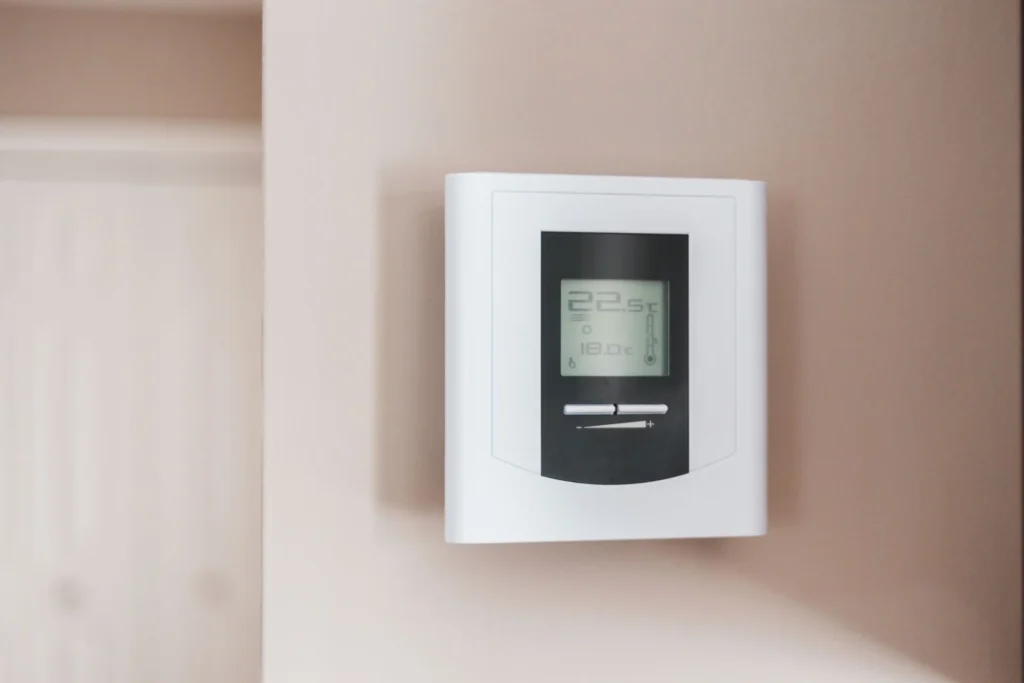
Aux heat is the backup heat your heat pump turns on automatically when it can’t keep up on its own. Emergency heat is the same backup source, but you switch it on yourself and the heat pump stays off. Seeing aux heat on a cold day is normal; using emergency heat should be rare.
Those two words on a thermostat cause a lot of worry in an Ontario winter. This guide explains what each one means, why your thermostat shows them, when emergency heat is the right choice, what they do to your energy bill, and when a technician should take a look.
What Is Aux Heat on a Heat Pump?
Aux heat, short for auxiliary heat, is a second heat source that runs automatically when the heat pump can’t meet the demand by itself. Your thermostat brings it on without you doing anything, and it shuts off again once the heat pump can carry the load. It’s a normal part of how heat pumps work.
Lennox describes it in plain terms: auxiliary heat applies when the first stage of heating can’t keep up with the demand. The backup itself is usually one of two things:
- Electric resistance elements in the ductwork or air handler, common in homes without natural gas.
- A gas furnace or boiler in a hybrid or dual-fuel system, a common setup in Hamilton homes that added a heat pump to an existing furnace.
The difference matters. With electric elements, the backup can run alongside the heat pump. In a hybrid system, Natural Resources Canada notes the furnace can’t run at the same time as the heat pump, so “aux” means the furnace has taken over for now.
What Is Emergency Heat?
Emergency heat is a setting you choose yourself on the thermostat. It shuts out the heat pump and runs only the backup heat source. The thermostat may label it “EM Heat” or “Emergency”. It exists so your home can stay warm when the heat pump is broken, being repaired, or shouldn’t run for some reason.
Lennox defines it simply as using your supplemental heat by itself. Emergency heat doesn’t give you more heat than aux heat does. It only changes which equipment is doing the work, and in most homes the backup costs more to run than the heat pump does.
Aux Heat vs Emergency Heat: The Key Differences
The main difference between aux heat and emergency heat is who turns it on and whether the heat pump keeps running. Aux heat is automatic and works with or takes over briefly from the heat pump. Emergency heat is manual and keeps the heat pump off until you change the setting back.
| Aux heat | Emergency heat | |
|---|---|---|
| Who turns it on | The thermostat, automatically | You, manually |
| Heat pump | Keeps running on electric backup systems; pauses on hybrid systems | Stays off |
| Heat source | Electric elements, or a furnace or boiler | The same backup source |
| When it shuts off | By itself, when no longer needed | Only when you change the setting |
| Normal in winter? | Yes, in moderation | No, it’s for problems |
Why Does My Thermostat Say Aux Heat?
Your thermostat says aux heat because the heat pump needs help at that moment. The most common reasons are very cold outdoor temperatures, a large jump in the thermostat setting, and the defrost cycle. A short run in any of these situations is expected and doesn’t mean anything is wrong with your system.
- Cold weather. Natural Resources Canada calls this the balance point: the temperature below which a heat pump doesn’t have enough capacity to meet the heating needs of the home. The backup covers the gap.
- Raising the temperature quickly. A big increase on the thermostat, such as after a night setback, can bring on aux heat so the house catches up.
- Defrost. Outdoor coils collect frost in winter. During defrost the heat pump briefly reverses, and supplementary heat may come on so you don’t feel cool air from the vents.
- Thermostat settings. Many systems use an outdoor temperature limit that decides when aux heat is allowed to run. Lennox calls this the AUX lockout temperature.
Is It Normal for Aux Heat to Run in a Hamilton Winter?
Yes. It’s normal for aux heat to come on during cold snaps, defrost cycles and quick temperature recovery in a Hamilton winter. How often depends on the type of heat pump. A standard unit leans on its backup sooner, while a cold-climate model can carry the home much further into the cold before it needs help.
Our guide to how heat pumps perform below -15°C shows how output drops with temperature, and this guide to heat pumps at -30°C covers the extremes. If you are still deciding what backup your home needs, see whether a heat pump can replace a furnace.
What isn’t normal is aux heat staying on for extended periods when it’s warmer than about -10°C. That points to a problem with the heat pump, its settings or its airflow.
When Should You Use Emergency Heat?
Use emergency heat only when the heat pump can’t or shouldn’t run: it has stopped working, the outdoor unit is damaged or iced over and not recovering, or a technician has told you to. It’s a temporary way to keep the house warm until the system is repaired, not a setting for ordinary cold days.
- Set the thermostat to EM Heat or Emergency. Check your thermostat’s manual if the label isn’t obvious.
- Book a repair. Emergency heat keeps you warm, but it doesn’t fix anything.
- Switch back to normal heat once the heat pump is working again. Emergency heat won’t turn itself off.
Don’t use emergency heat just because it’s very cold outside. Modern heat pumps and their automatic aux heat are designed for that, and the thermostat will usually make a better decision than a manual override.
If you smell gas or a CO alarm sounds, don’t change thermostat settings. Leave the home and call your gas utility or 911 from outside.
Does Aux Heat Cost More to Run?
Usually, yes, at least with electric backup. Electric resistance heat turns one unit of electricity into one unit of heat, while a heat pump in moderate weather delivers two or more units of heat for each unit of electricity. That’s why long aux heat run times can show up on your hydro bill.
Hybrid systems are different because the backup burns natural gas. Natural Resources Canada describes an economic balance point: the outdoor temperature at which running the supplementary system becomes more cost effective than running the heat pump. Depending on your rates and settings, a furnace taking over on the coldest days can be the cheaper choice, so seeing aux on a hybrid system isn’t automatically a bad sign.
Signs Your Heat Pump Is Using Aux Heat Too Much
Your heat pump may be using aux heat too much if the indicator stays on for hours in mild weather, your electricity bill jumps without colder weather to explain it, or the air from your vents swings between warm and cool. Any of these is worth having checked, because the cause is often simple to fix.
Common causes a technician will look for include:
- A clogged filter or restricted airflow
- A low refrigerant charge or a leak
- An outdoor unit blocked by snow or ice, or a defrost problem
- A failing compressor or outdoor fan
- A thermostat that is set up incorrectly, wired incorrectly, or has the wrong outdoor temperature limits
- A heat pump that is too small for the home
How to Reduce Aux Heat Use
The best way to reduce aux heat use is to avoid big thermostat swings, keep air moving and keep the outdoor unit clear. Natural Resources Canada recommends moderate setbacks of no more than 2°C, because larger setbacks can make the system rely on backup heat to recover. Most of the rest is simple upkeep.
- Keep setbacks to 2°C or less, or use a smart thermostat designed for heat pumps.
- Change the filter on schedule and keep vents and return grilles clear.
- Keep snow, ice and debris away from the outdoor unit after every storm.
- Avoid using emergency heat unless the heat pump has actually failed.
- Book annual maintenance. A one-time heat pump tune-up at Dynamic is $119.99.
If you are comparing systems, our guide to how heat pumps work explains the main types and what each one does in the cold.
When to Call a Technician
Call a technician if aux heat runs constantly in mild weather, the heat pump has stopped heating, ice is not clearing from the outdoor unit, or you have had to use emergency heat at all. Any fault in a gas backup must be handled by a licensed gas technician, and running on backup alone costs more each day.
In Ontario, gas work must be done by a technician licensed by the Technical Standards and Safety Authority (TSSA). Dynamic Heating & Cooling’s team of 20+ licensed technicians diagnoses and repairs heat pumps across Hamilton, with 24/7 emergency service. A standard service call is $119.99 ($174.99 after hours, weekends and holidays), credited toward the repair if you go ahead. Book heat pump repair in Hamilton or call 289-962-4811.
FAQs
Should aux heat be on all the time?
No. Aux heat should come on for cold spells, defrost cycles and quick temperature recovery, then shut off. If it stays on for hours when it’s warmer than about -10°C, the heat pump may have a fault, restricted airflow or an incorrect thermostat setting. A technician can usually find the cause in one visit.
Can I turn off aux heat?
Some thermostats let you limit aux heat, but turning it off completely isn’t a good idea on a heat pump that relies on it. Without backup, your home could get cold during deep freezes and defrost cycles. If you want less aux heat, ask a technician to review your outdoor temperature settings first.
Is emergency heat bad for a heat pump?
No. Emergency heat doesn’t harm the heat pump, because the heat pump stays off while it runs. The downside is cost, since the backup source does all the heating. Use it when the heat pump has failed, then book a repair and switch the thermostat back to normal heat once it’s fixed.
Note: Prices in this article are Dynamic Heating & Cooling’s current prices as of November 2026. Your final price depends on your home and system, confirmed during the on-site assessment. Thermostat labels and settings vary by model, so check your manual. Questions? Call 289-962-4811.