
 Proudly Family-Owned
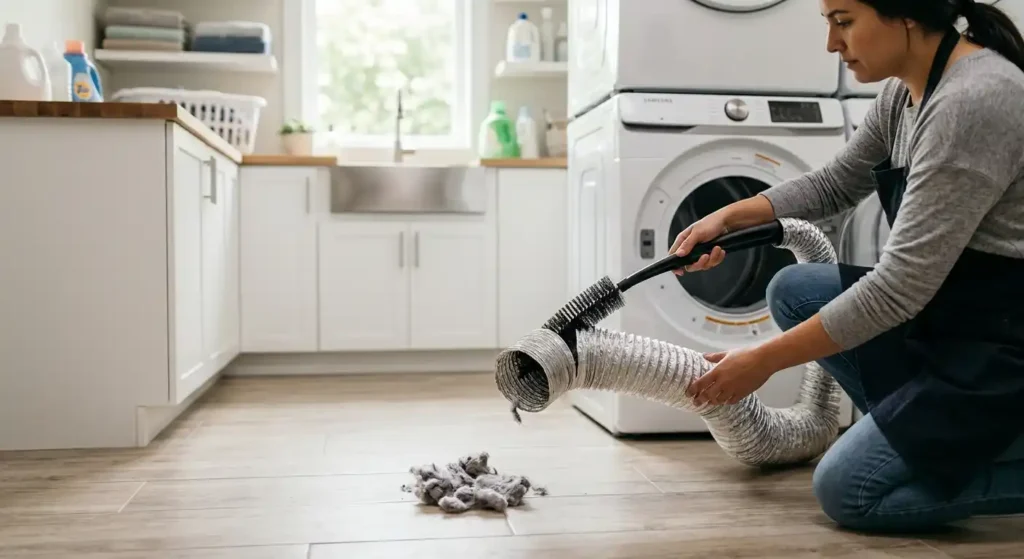
A clogged dryer vent restricts airflow, makes your dryer work harder and run hotter, and is consistently identified by fire safety agencies as a leading cause of dryer fires specifically. Cleaning it yourself is straightforward with the right tools for most homes — this guide covers exactly how, how often, the signs you’re overdue, and when the job is better left to a professional.
Why Dryer Vent Cleaning Matters
Fire Prevention
Lint is highly flammable, and it builds up inside the vent duct over time — not just in the lint trap you empty after every load. As it accumulates, airflow gets restricted, the dryer runs hotter to compensate, and that combination of heat and flammable material is exactly the setup fire safety agencies warn about. The U.S. Fire Administration and the National Fire Protection Association both identify lint and vent blockage as a leading cause of the thousands of dryer-related home fires reported each year. This isn’t a rare or theoretical risk — it’s one of the most common preventable home fire causes there is.
Dryer Efficiency
A clean vent lets your dryer do its job with less effort: shorter cycles, less energy used per load, and less wear on the appliance itself. A clogged one forces the dryer to run longer and hotter to get the same result, which shows up as higher energy use and, over time, a shorter appliance lifespan.
Appliance Lifespan
Reduced strain means fewer breakdowns and a longer service life for your dryer. Regular vent cleaning is one of the cheapest things you can do to protect what’s often a several-hundred-to-thousand-dollar appliance.

How to Clean Your Dryer Vent Yourself
Gather Your Tools
- A dryer vent cleaning brush — dislodges lint and debris from inside the duct
- A vacuum with a hose attachment — for loosened lint at the dryer end and around the unit
- A drill-powered vent cleaning kit (optional) — flexible rods with a brush head, useful for longer or more complex duct runs
- Screwdriver — for duct clamps and fasteners
Disconnect the Dryer
- Unplug it. If it’s a gas dryer, also turn off the gas valve before you start.
- Pull it away from the wall to expose the vent duct at the back.
Clean the Vent
- Detach the vent hose from the back of the dryer — a screwdriver may be needed for clamps.
- Vacuum the vent opening on the dryer to clear the first stretch of lint and debris.
- Brush the duct. Insert the cleaning brush as far as it will go, rotate, and pull it back out. Repeat several times.
- Use a drill-powered kit if you have one. Attach flexible rods to the brush head, insert into the duct, and use the drill to rotate the brush while moving it back and forth — this reaches further and clears stubborn buildup more thoroughly than a hand brush alone.
- Clean from the outside too. Go to the exterior vent, remove the cover, and clear lint and debris from that end as well — a duct only cleaned from one side isn’t fully clean.
- Watch for obstructions. Resistance while brushing can mean a bird’s nest or heavy buildup that needs extra attention — see the note on exterior vents below.
Reconnect and Test
- Reattach the vent hose securely, with all clamps tight to prevent air leaks.
- Turn the gas valve back on if you shut it off, and check for leaks before plugging back in.
- Run a short test cycle and confirm air is flowing freely both inside and at the exterior vent, with no lint escaping around fittings.
A Note on Exterior Vents
The outside vent cap is a common entry point for birds and small animals looking for a warm, sheltered spot — especially in fall. A vent cap with a working flap or louvre helps prevent this. If yours doesn’t open freely when the dryer runs, or you find nesting material when you clean it, that’s worth addressing at the same time as your regular cleaning rather than waiting for it to fully block the vent.

-
How Often Should You Clean Your Dryer Vent?
Once a year is the standard recommendation for most households. Clean more often — every six months or so — if you have a large family, run the dryer daily, have pets that shed heavily, or have a longer-than-typical duct run between the dryer and the exterior wall.
Signs Your Dryer Vent Needs Cleaning
- Longer drying times — clothes routinely needing a second cycle to fully dry
- A hot dryer or hot clothes at the end of a cycle, beyond the usual warmth
- A burning smell during or after drying — treat this as urgent, not routine
- Visible lint around the vent opening, either at the dryer or outside near the exterior exhaust
- The exterior vent flap not opening properly when the dryer is running
Using a Dryer Vent Cleaning Kit
A drill-powered kit — flexible rods with a brush head — makes longer or more complex duct runs manageable without professional help. Connect the rods to the brush head (adding sections as needed for duct length), secure it to the drill, and insert from either the dryer end or the exterior vent. Run the drill while moving the brush back and forth to dislodge buildup along the full length, then vacuum up what’s left around both openings.
When to Call a Professional
DIY cleaning handles most residential setups, but call a professional if:
- The duct run is long, has multiple bends, or runs through a wall, floor or ceiling you can’t easily access
- You’ve cleaned it yourself and drying times still haven’t improved — that can indicate a duct problem beyond lint (a crushed section, an incorrect duct type, or excessive length)
- You’re not comfortable working with a gas dryer’s shutoff valve
- You manage a multi-unit or commercial property, where duct runs are often longer and code compliance matters more
What to look for in a professional: dryer vent cleaning has its own dedicated credential — the CSIA Certified Dryer Exhaust Technician (C-DET) — which specifically covers proper inspection, cleaning, and code compliance for dryer venting systems. Ask whether the technician holds it, and confirm they’ll inspect the full duct run, not just clean what’s accessible from the laundry room.

Common Vent Issues in Older Hamilton Homes
Older homes, including many in Hamilton’s established neighbourhoods, more often have longer or more convoluted duct runs than newer construction — dryers relocated to interior rooms or basements over the years without the ductwork being redesigned for the added length and bends. Longer, bendier runs collect lint faster and are harder to fully clear with a hand brush alone, which is exactly the scenario where a professional inspection earns its cost.
The Bottom Line
For most homes, cleaning your dryer vent once a year with a brush and vacuum is enough to keep it safe and efficient. If your duct run is long, hard to access, or you’ve cleaned it yourself and drying times still haven’t improved, that’s the point to call in a professional rather than keep working at it.
If that’s where you’ve landed, contact us or check out our duct cleaning services — we’ll inspect the full run, not just what’s accessible from the laundry room, and tell you plainly whether it’s a quick clean or something that needs more attention.